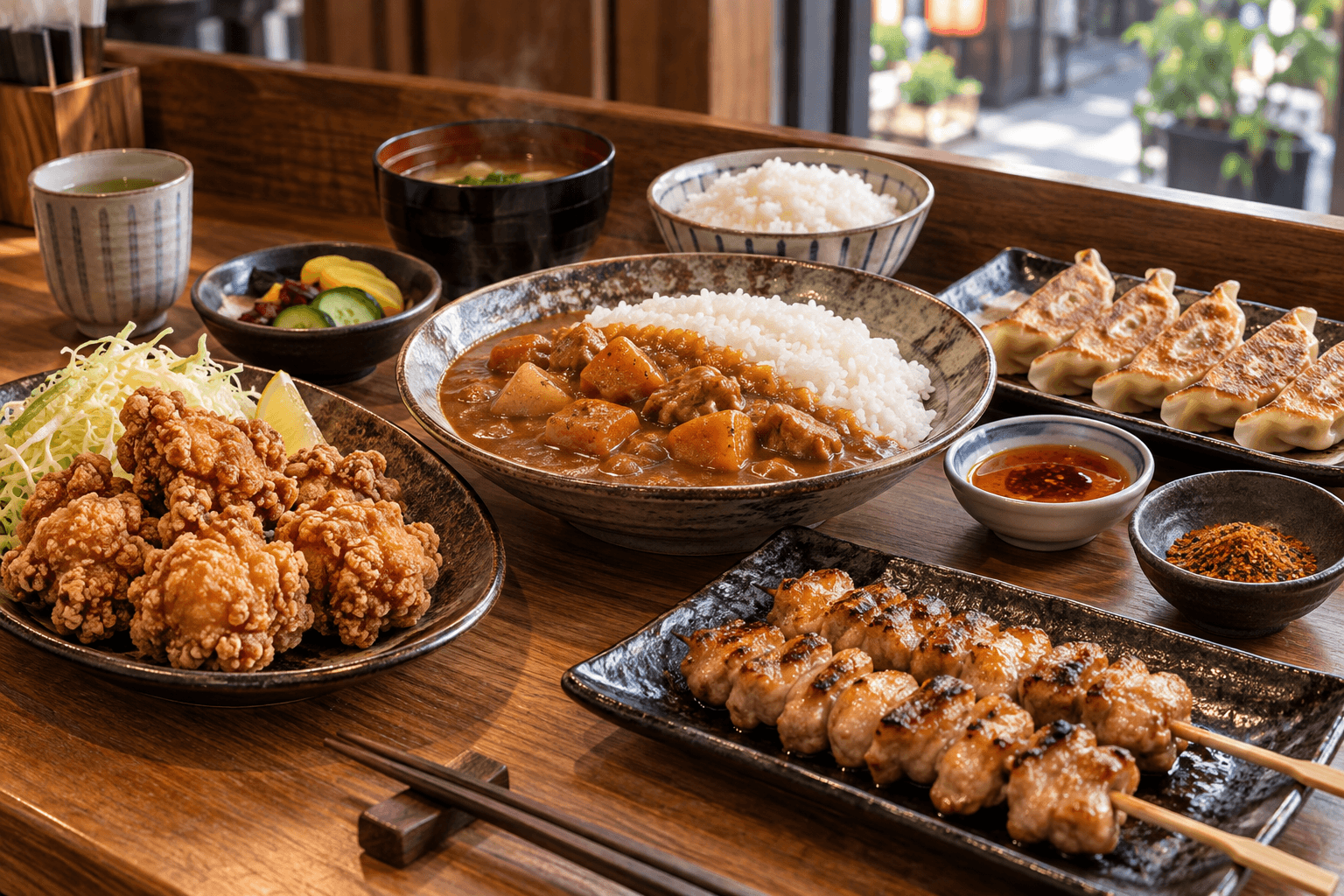
- Approachable first dishes
- Halal ingredient checks
- Allergy communication
- Restaurant etiquette
Start with curiosity, not a single 'Indonesian palate'
Indonesian travellers do not all prefer the same level of spice, sweetness, or richness. Japanese cooking is equally diverse: a delicate Kyoto meal, smoky Fukuoka yakitori, Osaka street food, and Hokkaido soup curry should not be treated as one mild flavour profile.
Washoku often uses seasonal ingredients and dashi to build umami. Dashi may contain kombu, dried bonito, other fish, or animal ingredients depending on the recipe. Soy sauce, miso, sake, mirin, sugar, vinegar, and fermented products appear in many sauces, but their use varies by restaurant and region.
Use the dishes below as familiar starting points rather than guarantees. A dish name alone cannot confirm meat type, alcohol, halal status, vegetarian status, or allergens; ask the restaurant about the exact version being served.
1. Karaage: crisp, savoury, and easy to share
Karaage commonly refers to bite-sized ingredients seasoned, lightly coated, and fried. Chicken karaage is the version most visitors recognise, with a juicy centre and crisp coating that can feel familiar to anyone who enjoys Indonesian fried chicken.
The marinade may include soy sauce, ginger, garlic, sake, or other seasonings. Confirm the meat and marinade when religious requirements or allergies matter, and remember that a shared fryer can create cross-contact. Lemon, mayonnaise, or salt may be served alongside rather than mixed in.
2. Japanese curry rice: comforting, but check the roux
Japanese curry is usually thick, gently spiced, and served with rice. Toppings range from vegetables and egg to fried chicken, beef, pork cutlet, or seafood. Spice levels differ by restaurant; the darkest colour or highest numbered level is not a universal measure.
Curry that looks meat-free may still use meat stock, animal fat, dairy, wheat, or alcohol-derived seasoning in the roux. For halal, vegetarian, vegan, or allergy needs, choose a clearly identified menu and ask about both the sauce and topping rather than ordering vegetable curry by name alone.
3. Gyudon, oyakodon, and other rice bowls
Donburi places a topping over rice, which makes it a practical meal between sightseeing stops. Gyudon uses thin beef and onion; oyakodon combines chicken and egg; katsudon usually places a breaded cutlet with egg over rice. Many versions use a sweet-savoury sauce built from dashi, soy sauce, sugar, and mirin or sake.
Katsu is not automatically chicken: tonkatsu means pork cutlet, while chicken katsu should be named separately. Even a beef or chicken bowl can contain cooking alcohol or non-halal stock, so a familiar-looking protein does not settle the ingredient question.
4. Yakitori: choose the cut, seasoning, and kitchen carefully
Yakitori means grilled chicken skewers, and specialist restaurants may use breast, thigh, skin, liver, gizzard, heart, or cartilage. Negima, chicken with spring onion, is an approachable first order. Shio is salt-based, while tare is a sweet-savoury glaze whose recipe may include mirin, sake, or other ingredients.
A yakitori restaurant can also serve pork, beef, alcohol, and non-chicken dishes, and grills or utensils may be shared. Travellers who require halal preparation should look for a suitable certified or clearly documented restaurant instead of assuming every chicken skewer qualifies.
5. Gyoza: the filling matters more than the wrapper
Pan-fried gyoza has a crisp base and soft wrapper that can feel familiar to fans of dumplings and Indonesian snacks. Standard restaurant gyoza often contains pork, cabbage, garlic, ginger, and chives; it should not be described as chicken unless the menu says so.
Vegetable gyoza may still share a grill, oil, utensils, or sauce with meat products. Wheat and soy are common concerns, and sesame may appear in sauces. Check the filling and cross-contact practices when they matter to you.
6. Udon, soba, ramen, and the hidden importance of broth
Noodles offer very different textures and broths. Udon is thick wheat noodle, soba is associated with buckwheat but may also contain wheat, and ramen styles can use pork, chicken, seafood, miso, soy sauce, or combinations. Tonkotsu specifically refers to pork-bone broth.
A vegetable topping does not make the broth vegetarian or halal. Mentsuyu and dipping sauces commonly use dashi, soy sauce, and mirin. Ask about broth, sauce, noodles, toppings, and preparation; for a severe allergy, advance confirmation is safer than trying to resolve a complex recipe during a busy service.
7. Sushi, onigiri, and simple-looking foods
Plain rice, grilled fish, vegetable sushi, and onigiri can provide lighter options, but labels still matter. Sushi rice is seasoned, fillings may contain mayonnaise or processed seafood, and onigiri can hide tuna mayonnaise, fish roe, bonito, or meat inside. Inari sushi uses sweet seasoned tofu pockets whose recipe can vary.
Raw seafood carries food-safety considerations and does not address religious preparation by itself. Choose a reputable restaurant, follow pregnancy or medical advice relevant to you, and ask about soy sauce, shared surfaces, and ingredients when necessary.
How to find halal food without relying on assumptions
Japan has no single central halal-accreditation authority. 'Halal-certified', 'Muslim-friendly', 'no pork', and 'no pork or alcohol' can describe different standards. Decide what you personally require, identify the certifying body when a certificate is displayed, and ask whether alcohol is served or the kitchen and utensils are shared.
Seafood and vegetarian dishes are not automatic halal fallbacks. Dashi may contain fish, sauces may include mirin or cooking sake, curry can contain animal fat, sweets can contain gelatin, and a fryer may be shared. JNTO provides a Muslim Services Inquiry Sheet that covers pork-derived ingredients, alcohol, meat, and separation of storage and utensils.
Research suitable restaurants near each day's itinerary before arrival and reconfirm current hours. Major cities generally have more options than rural areas. A hotel room with a kitchenette can add flexibility, but check cookware and storage if separation matters.
- Save the restaurant name, address, reservation, and certification details offline.
- Ask about pork, lard, gelatin, shortening, emulsifiers, meat stock, mirin, and cooking sake.
- Confirm shared fryers, grills, knives, boards, dishes, and storage when required.
- Use JNTO's bilingual inquiry sheet instead of relying on one translated phrase.
Food allergies need a separate plan
Halal, vegetarian, and allergy requirements are not interchangeable. Pack a professionally translated allergy card naming the ingredient and the severity, contact restaurants in advance, and carry prescribed emergency medication. If staff cannot confidently confirm a dish, choose another option.
Packaged food labels can help, but restaurant allergen information is not universal and recipes can change. Wheat, egg, milk, soy, sesame, peanuts, tree nuts, crustaceans, fish, and buckwheat may appear in familiar dishes. Cross-contact remains possible even when the ingredient is absent from the recipe.
Getting more heat without disrespecting the dish
Look for ichimi togarashi, shichimi togarashi, rayu chilli oil, yuzu kosho, spicy curry levels, or a restaurant's own chilli paste. Each condiment has a distinct flavour and may contain allergens or alcohol-derived ingredients, so check the label or ask when necessary.
Do not assume outside sambal is welcome. Some restaurants prohibit outside food, and adding it before tasting can be discourteous in a chef-led setting. Ask permission, use condiments in moderation, and buy a suitable local chilli product if you want a backup.
Avoid bringing sambal or instant food containing meat into Japan without checking quarantine rules. Japan's Animal Quarantine Service says most meat and meat products cannot enter without a government inspection certificate, including cooked, processed, or vacuum-packed products.
Simple restaurant etiquette
Arrive on time for reservations and cancel early if plans change. At some izakaya, an automatically served appetiser called otoshi is linked to a table charge. Tipping is not customary. Follow the venue's rules about queues, photographs, perfume, children, and outside food.
Never stand chopsticks upright in rice or pass food directly from chopsticks to chopsticks. Noodle slurping is acceptable but optional. Order a manageable amount, return trays where requested, and say arigato gozaimashita when leaving.
A practical food plan for the first trip
Mark one reliable breakfast, lunch, and dinner option around each hotel, plus a backup for late arrival. Reserve high-demand or dietary-specific restaurants where possible, and leave room for a regional speciality instead of repeating only familiar dishes.
A good food trip balances preparation with discovery. Verify what you must avoid, communicate clearly, then explore textures, seasonal ingredients, and local cooking styles without expecting every meal to taste like food at home.
Frequently asked questions
Which Japanese foods are easy for Indonesian travellers to try first?
Chicken karaage, Japanese curry rice, selected rice bowls, yakitori, gyoza, udon, and onigiri are approachable starting points. Ingredients vary, so the dish name alone cannot confirm halal, vegetarian, or allergy suitability.
Is chicken karaage in Japan halal?
Not automatically. The chicken source, marinade, cooking alcohol, shared fryer, utensils, and kitchen practices all matter. Choose a suitable certified or clearly documented restaurant when halal preparation is required.
Are seafood and vegetarian dishes in Japan always halal?
No. Broth, sauce, mirin, cooking sake, animal fat, gelatin, and shared equipment may still be involved. Ask about the complete recipe and preparation standard.
Does Japanese curry usually contain pork?
Recipes vary. Curry roux may use meat stock or animal fat, while toppings can include pork, beef, chicken, seafood, vegetables, or egg. Confirm both the sauce and topping rather than judging from the menu photo.
Can I bring sambal from Indonesia to Japan?
A sealed plant-based commercial product may still be subject to customs or plant-quarantine rules. Products containing meat are generally restricted without the required government inspection certificate. Check Japan's official quarantine guidance before packing any food.
How should I communicate a severe food allergy in Japan?
Carry a professionally translated allergy card, contact the restaurant before visiting, explain the risk of cross-contact, and carry prescribed emergency medication. Do not eat the dish if staff cannot confirm it is safe for your needs.
Sources and further reading
We used the following primary consumer resources to review time-sensitive claims in this guide.
Compare options for your trip.
Continue to Traveloka to check current schedules, availability, and final prices for your travel dates.
Affiliate disclosure. This page contains Traveloka affiliate links. We may earn a commission when you book through them, at no additional cost to you. Commercial relationships do not determine our editorial recommendations.