- Seven distinct experiences
- Route-friendly combinations
- Cultural etiquette
- Volcano and beach safety
How to use this Yogyakarta destination guide
Yogyakarta—often called Jogja—is both a city and a special-region destination. Its attractions spread from the historic centre to Prambanan in the east, Merapi's southern slopes in the north, the Dlingo hills in the south, and Gunungkidul's coast much farther southeast. They should not all be treated as nearby city stops.
Group places by direction and allow at least three full days for a balanced first visit. One day can focus on the historic centre, another on Prambanan and eastern Sleman, and a third on either Merapi, Mangunan, or the coast. Opening rules, volcanic conditions, performances, and road times can change, so verify them shortly before travel.
- Keep the city centre together on foot or short transfers.
- Choose one outer-region day rather than crossing the region repeatedly.
- Leave extra road time on weekends and holidays.
1. Malioboro and the historic city centre
Malioboro is a useful introduction to central Yogyakarta, with shopping, food, public spaces, and easy access from Yogyakarta railway station. Walk south towards the Zero Kilometre area to see civic and colonial-era landmarks, then continue towards the Kraton district on a separate part of the day.
Teras Malioboro houses many traders and is useful for souvenirs and snacks. Compare quality and prices calmly, keep valuables secure in crowds, and agree on the route and complete fare before taking an andong or becak. The street is lively after dark, but individual stalls and attractions keep their own hours.
2. The Kraton and Taman Sari
The Kraton Ngayogyakarta Hadiningrat remains a living royal palace and cultural institution, not simply a museum set. Visitor areas present court history, architecture, objects, and performance traditions. Dress respectfully, stay within public areas, and follow staff guidance around ceremonies and photography.
Taman Sari is a separate historic complex associated with the Yogyakarta court, known for its bathing area, gates, residential remains, and surrounding neighbourhood. Sumur Gumuling and other sections may have different access arrangements, so do not assume every image seen online is included in one route or ticket.
The palace and Taman Sari sit within the wider Cosmological Axis of Yogyakarta and its Historic Landmarks, inscribed on UNESCO's World Heritage List in 2023. Visit earlier in the day and check current opening times, because palace tourism units can close earlier than the surrounding city attractions.
3. Prambanan Temple Compounds
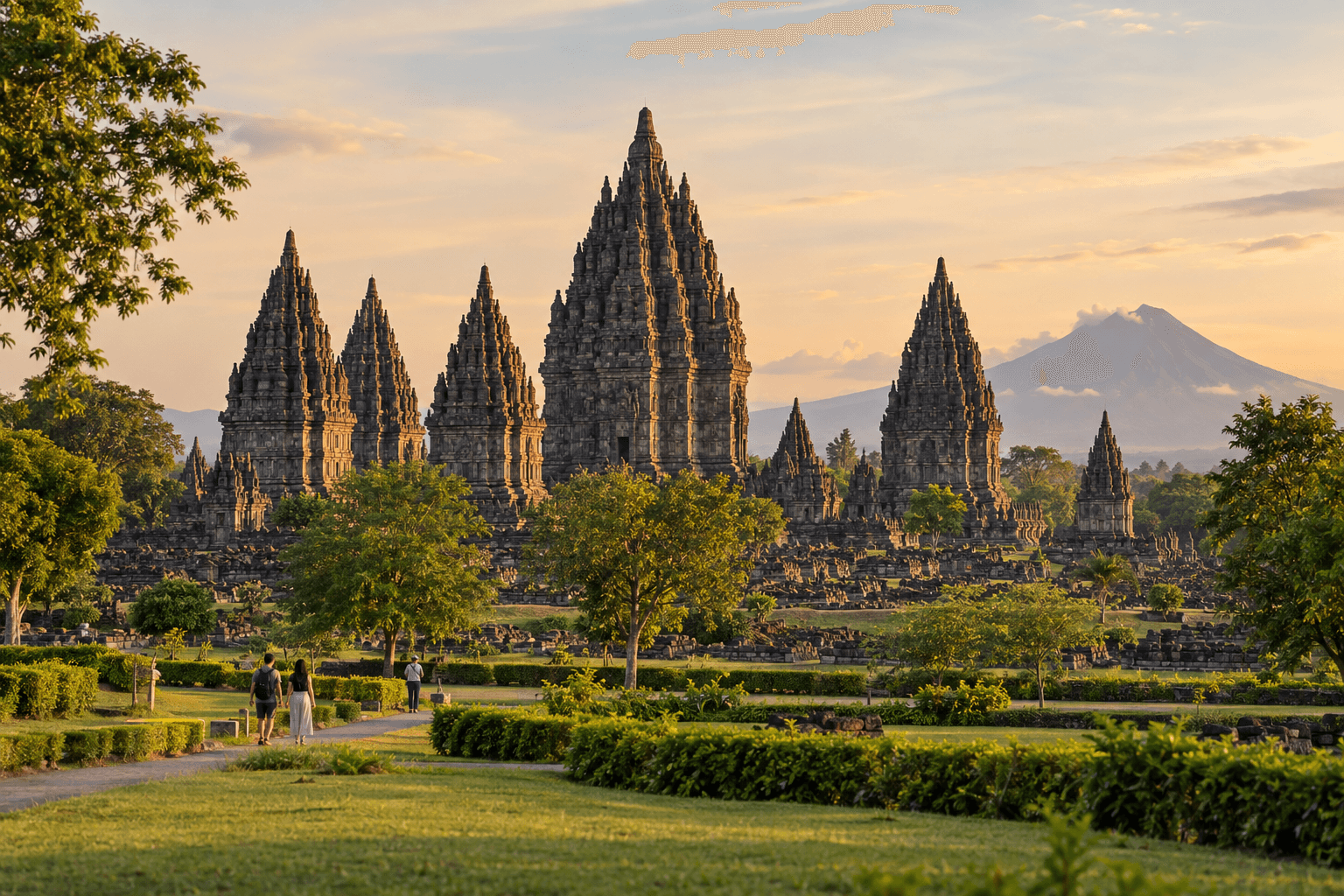
Prambanan Temple Compounds is a UNESCO World Heritage property on the border of Yogyakarta and Central Java. The listed property includes the Hindu Prambanan complex and the Buddhist Sewu, Lumbung, and Bubrah temples, making the archaeological park more extensive than its most photographed central towers.
Allow enough time to walk beyond the main courtyard and read the Ramayana reliefs. Conservation controls can affect access to individual structures. Wear sun protection, carry water, and never climb or touch areas outside the visitor route.
The Ramayana Ballet operates on selected dates and venues with separate schedules and tickets. A sunset visit and an evening performance can work together only when opening, entry, show time, weather, and return transport align; verify each component rather than treating the performance as nightly.
4. Mount Merapi's southern slopes
The Kaliurang and Cangkringan areas provide viewpoints, museums, villages, and landscapes shaped by Mount Merapi. Commercial jeep tours often visit sites connected with the 2010 eruption, but routes and stops vary. This is disaster-history tourism around an active volcano, so it deserves more care than an adrenaline photo ride.
Choose an established operator, confirm the route, vehicle condition, passenger limit, insurance, and safety briefing, and do not pressure a driver to speed through water or rough ground. Access restrictions can change with volcanic activity, weather, landslides, or official recommendations.
Check the current Merapi status and exclusion advice from BPPTKG before departure and obey closures on the ground. A clear summit view is never guaranteed, even at sunrise. For hiking or access beyond normal tourism areas, use the applicable official rules rather than treating a jeep tour as mountain permission.
5. Tebing Breksi and eastern Sleman
Tebing Breksi is a community-developed attraction in Sambirejo created from a former stone-quarry landscape. Carved reliefs, an open-air performance space, and elevated views make it very different from the nearby archaeological sites. The rock is primarily volcanic tuff, despite the destination's familiar ‘Breksi’ name.
The exposed site can be hot in the middle of the day, and reaching the upper viewpoints involves steps and uneven surfaces. Wear suitable shoes, use the barriers, and consider late afternoon for softer light. Haze and cloud can obscure views of Prambanan, Yogyakarta, or Merapi.
Tebing Breksi pairs logically with Prambanan, Ijo Temple, or Ratu Boko because they lie east of the city, but visiting all of them plus a performance can still be too much for one day. Choose the places that match your interest and confirm closing times.
6. Gunungkidul's south-coast beaches
Gunungkidul lies southeast of Yogyakarta city and has a long series of beaches framed by karst hills. The beach commonly promoted as Indrayanti is also known as Pulang Syawal; Drini, Sadranan, Baron, and others have distinct shoreline shapes, facilities, and road access. Choose one cluster rather than trying to collect beach names.
White sand and blue water do not guarantee safe swimming. Indonesia's southern coast faces the Indian Ocean and can have powerful waves, shore break, and rip currents. Obey flags, barriers, lifeguards, and local instructions; never assume that online snorkelling photos mean conditions are safe on the day.
Road travel from the city can take several hours return, especially on busy days. Carry cash, sun protection, drinking water, and dry clothing, and agree on return timing with a driver. Check food prices before ordering seafood and keep waste out of the beach environment.
7. Hutan Pinus Mangunan and the Dlingo hills
Hutan Pinus Mangunan is a managed pine-forest attraction in the Dlingo area of Bantul, with shaded paths and a wooden performance space. It is often combined with other hill destinations, but Hutan Pinus, Kebun Buah Mangunan, and nearby viewpoints are separate places with their own entrances and operating arrangements.
Morning mist over the Oya valley is weather-dependent and is more closely associated with particular Mangunan viewpoints than every corner of the pine forest. It cannot be promised for a specific date. Check which gate opens early enough before planning a sunrise trip.
The final roads are hilly and winding. Use a suitable vehicle and experienced driver, wear shoes with grip, and take care on wet paths and raised photo structures. A quiet weekday visit usually suits the forest atmosphere better than a rushed multi-stop tour.
A realistic way to organise the seven places
For three days, spend day one around Malioboro, the Kraton, and Taman Sari; day two around Prambanan and one eastern attraction such as Tebing Breksi; and day three at either Merapi, Mangunan, or Gunungkidul. A fourth day lets you add another outer region without turning the trip into continuous road travel.
Yogyakarta also rewards unplanned time for food, museums, crafts, and neighbourhood walks. Keep the route flexible when rain, heat, volcanic advice, or a cultural event changes access. The best itinerary is the one that leaves enough time to understand each place.
- 3 days: city centre, Prambanan, and one nature region.
- 4–5 days: add a second outer-region day.
- Stay near the centre for rail access or choose another area only when most plans are there.
Frequently asked questions
How many days do you need in Yogyakarta?
Three full days cover the historic centre, Prambanan, and one outer region at a sensible pace. Four or five days allow both Merapi and either Mangunan or the Gunungkidul coast with more flexibility.
Can I visit Prambanan and Borobudur in one day?
It is possible with an early start and efficient transport, but the sites lie in different directions and each deserves time. Separate days produce a less rushed visit, especially when adding smaller temples or an evening performance.
Is Mount Merapi safe to visit?
Access depends on the current volcanic status, official exclusion recommendations, weather, and local closures. Check BPPTKG information and follow authorities and responsible operators. Never enter a restricted zone.
Can you swim at Gunungkidul beaches?
Conditions differ by beach and day. Powerful Indian Ocean waves and rip currents can make swimming dangerous. Follow flags and local instructions and stay out of the water when an area is closed or unguarded.
What is the best area to stay in Yogyakarta for sightseeing?
The city centre near Malioboro or the Kraton is practical for a first visit and rail access. Other areas can suit quieter stays, but compare the location with the day trips and station or airport transfers you actually need.
Are the Kraton and Taman Sari one ticket?
Treat them as separate visitor attractions with their own entrances, tickets, hours, and accessible areas. Check current information before visiting.
Sources and further reading
We used the following primary consumer resources to review time-sensitive claims in this guide.
Compare options for your trip.
Continue to Traveloka to check current schedules, availability, and final prices for your travel dates.
Affiliate disclosure. This page contains Traveloka affiliate links. We may earn a commission when you book through them, at no additional cost to you. Commercial relationships do not determine our editorial recommendations.