- Eight destinations across six island regions
- Suggested nights and travel styles
- One-week and two-week route ideas
- Primary sources and practical booking checks
How to choose where to go in Indonesia
Indonesia is an archipelago, so the best destination is rarely the one with the most famous photograph. A beach break in Bali, a temple-focused stay in Central Java and a marine expedition in Raja Ampat are different holidays with different costs and travel days. The right choice depends on the experiences you want, the number of nights you have and your tolerance for flights, ferries or long road journeys.
This guide groups eight strong starting points by travel style. The suggested lengths are planning estimates, not minimum-stay rules. Count arrival and departure days separately: a three-night stop often gives you only two full sightseeing days. If you have one week, choose one or two nearby regions. If you have two weeks, three regions can work, provided you leave room for delays and rest.
Avoid treating every part of Indonesia as if it shared one weather forecast. Rainfall, sea conditions and access vary by island and month. Check a local forecast and the relevant park or transport operator shortly before travel. The destination descriptions below focus on experiences and logistics that remain useful even when schedules change.
- Choose your main experience first: culture, hiking, beaches or marine life.
- Add a buffer before long-haul flights after ferries or remote-island transfers.
- Check current entry, permit and park rules with official operators.
1. Bali: an accessible first introduction
Bali works well for a first Indonesia trip because its accommodation range and visitor services make it easier to build a flexible itinerary. The island is far more varied than a single beach resort. Ubud is a useful base for arts, villages and inland landscapes; Sanur offers a calmer coastal pace; and southern beach districts put restaurants and surf-focused shorelines closer to the daily plan.
Allow roughly four to six nights if you want time for both inland and coastal experiences. Resist changing hotels every night: traffic and distance can make a short map journey unexpectedly slow. Choose a base around your main activities, then take a limited number of day trips. Visit working rice landscapes and places of worship respectfully, following local signs, dress requirements and access restrictions.
Bali also pairs naturally with nearby Lombok or a longer onward flight to Flores. Those connections are useful, but a tight schedule can turn a holiday into repeated check-ins. Compare the total transfer time, including airport or port travel, rather than looking only at flight or boat duration.
2. Yogyakarta and Central Java: living culture and temple heritage
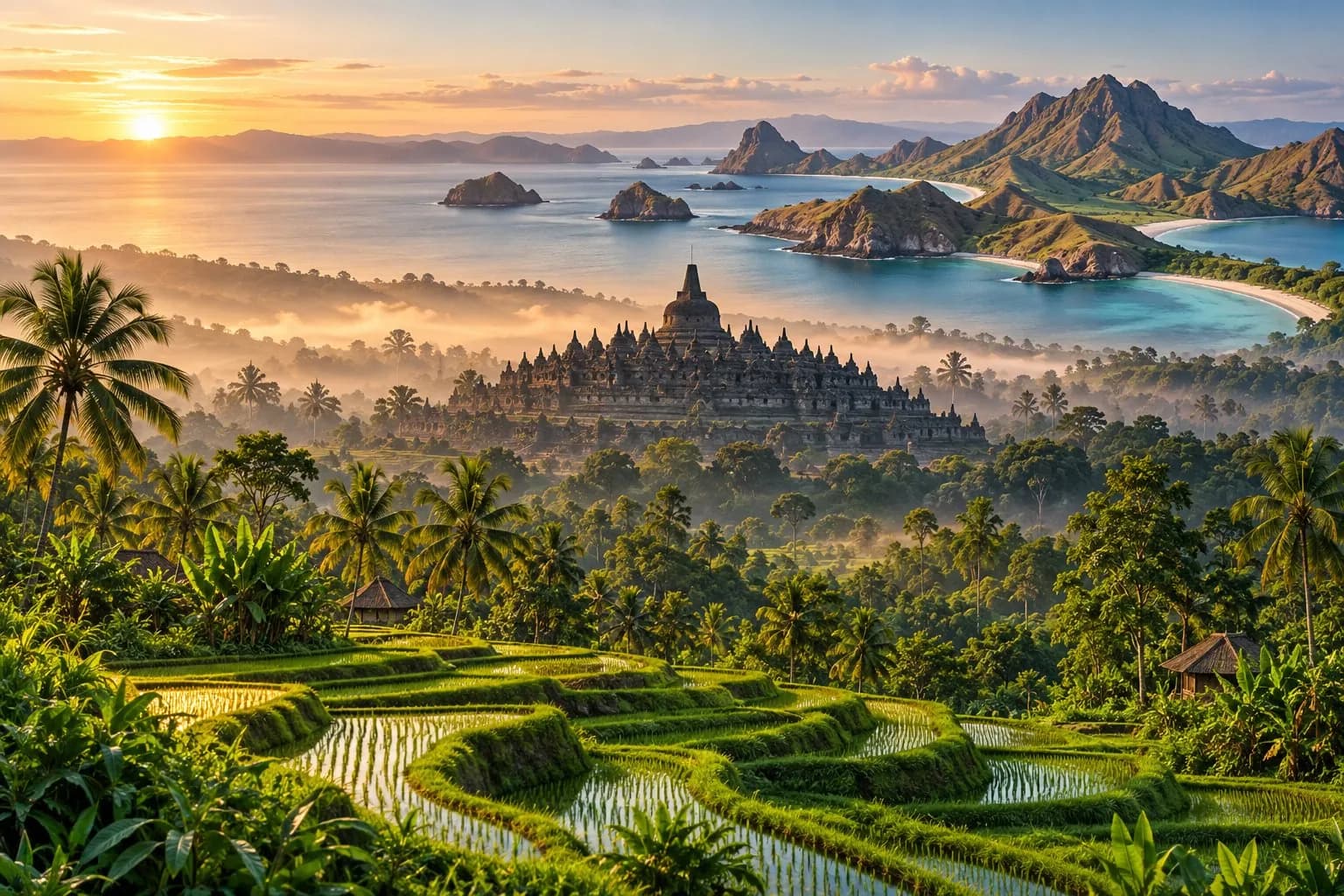
Yogyakarta is a strong base for travellers who put history, crafts and local food ahead of resort time. Its cultural landscape is itself recognised by UNESCO, while the Borobudur and Prambanan temple compounds are separate UNESCO World Heritage sites in Central Java and the Yogyakarta region. They should be treated as distinct visits rather than a single stop in the city centre.
Plan three or four nights to leave space for the city, one or both temple areas and unhurried meals. Borobudur is near Magelang, so allow for the road journey and check the official ticket options if entering the monument is important to you. Prambanan can be visited on a different day. Site access, time slots and conservation rules may change; confirm them with the official operator before leaving your hotel.
A thoughtful visit goes beyond collecting sunrise images. Explore local workshops, try regional dishes and learn why a living city surrounds these monuments. Hire a knowledgeable local guide if the historical context matters to you, and follow the on-site instructions that protect fragile structures.
3. East Java: volcano landscapes around Bromo and Ijen
East Java rewards travellers who enjoy dramatic landscapes and do not mind early departures. Mount Bromo is the better-known sunrise landscape, with viewpoints across a volcanic caldera. Ijen draws visitors for its crater scenery and a more demanding hike. Both are active volcanic areas, so access and safety instructions matter more than a fixed itinerary found online.
Give this region at least three or four nights if combining both areas. Bromo and Ijen are not adjacent attractions; the journey between their bases takes real time. A sunrise outing can also mean broken sleep, cold temperatures and exposure to dust or fumes. Choose transport, accommodation and a guide who explain the route clearly, and avoid compressing two strenuous nights into an exhausting race.
Park rules and volcanic conditions can change quickly. Check the relevant authority's latest notice before paying for a tour. If conditions are unsuitable, an alternative day in nearby towns or a slower Java itinerary is better than trying to force a closed route.
- Confirm the active park access rules before departure.
- Bring layers for pre-dawn temperatures and plan recovery time.
- Do not enter restricted areas for a photograph.
4. Lombok and the Gili Islands: beaches with different rhythms
Lombok is a good next step for travellers who want beaches, Sasak culture and a different pace from Bali. Its south coast has broad beach and surf areas, while the north provides access to the Rinjani landscape. Offshore, Gili Trawangan, Gili Air and Gili Meno each offer an island stay, though their atmosphere and facilities differ. Choose your island for your preferred pace, not simply because it appears on every itinerary.
Four to six nights allows you to combine a mainland base with an island stay without spending the whole trip in transit. A Rinjani trek is a separate, physically demanding undertaking and should not be squeezed into an ordinary beach day. Confirm the park's open season, booking rules and guide arrangements before committing. On the Gilis, check boat conditions and your onward connections, especially when a same-day flight is involved.
Snorkelling and marine wildlife are highlights, but responsible operators matter. Do not touch coral or feed animals, and listen to local guidance about currents. If you prefer a lower-effort holiday, a beach base on mainland Lombok with one carefully chosen island excursion may be more satisfying than repeated moves.
5. Labuan Bajo and Komodo National Park: a sea-focused journey
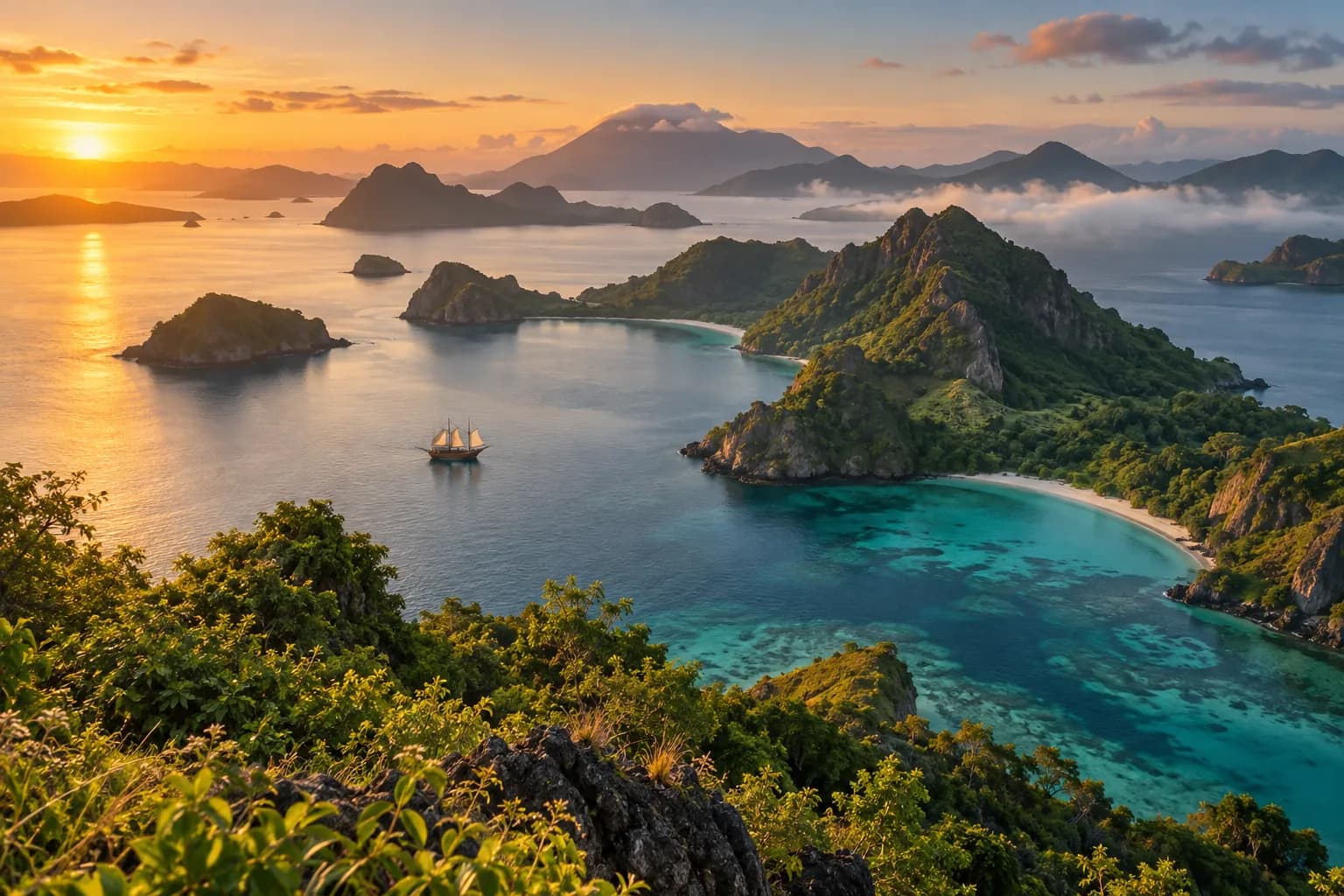
Labuan Bajo in western Flores is the gateway most visitors use for Komodo National Park. The draw is not only the famous Komodo dragon: island viewpoints, boat journeys and marine habitats make this a destination for travellers who enjoy time on the water. UNESCO recognises the national park for its terrestrial and marine significance, but sightings and specific stopovers are never guaranteed.
Allow three or four nights so a boat trip does not sit directly between a late arrival and an early departure. Decide whether a day boat or overnight vessel fits your comfort level, and check life jackets, weather decisions, passenger limits and cancellation terms before booking. Stay with authorised guides where required and never approach wildlife for a close-up image.
Boat routes, park fees and conservation restrictions can change. Ask the operator exactly which islands and activities are included and verify current rules through park channels. A traveller focused on scenery may choose a different route from someone whose priority is snorkelling, so compare itineraries rather than only headline prices.
6. Lake Toba and Samosir: slow travel in North Sumatra
Lake Toba offers a very different Indonesia experience: highland scenery, lakeside stays and opportunities to learn about Batak culture. Samosir Island sits within the lake and is a common base for visitors who want a quieter rhythm. This is a place to spend time rather than a quick photo stop between flights.
Plan around three or four nights, especially if travelling overland from Medan. Road and boat connections add meaningful time, and weather can affect lake crossings. Verify the latest route and departure details with your accommodation or transport provider. Once there, leave room for village visits, local food and conversations that go beyond the standard viewpoint circuit.
Treat cultural sites as places with communities, not sets for travel content. Ask before photographing ceremonies or people and use local guides when you want more context. Travellers with only a few spare days after a Java or Bali trip may find the journey too long; with a dedicated Sumatra itinerary, Lake Toba becomes a natural centrepiece.
7. Tana Toraja: highland landscapes and cultural depth
Tana Toraja in South Sulawesi is compelling for its highland scenery, architecture and living Toraja traditions. The region suits travellers interested in cultural context and a slower overland journey, not those looking for a quick attraction to tick off. Rantepao is a practical base for exploring surrounding villages and landscapes.
Allow at least three or four nights on the ground, plus the journey from a transport hub such as Makassar. Routes and flight availability can change, so check current connections rather than assuming an old timetable still applies. A local guide can help explain customs, identify sites that welcome visitors and prevent awkward or disrespectful behaviour.
Some visitors hope to observe ceremonial events. These are real family and community occasions, not scheduled performances. Attend only when invited or when your guide confirms visitors are welcome, dress appropriately, ask before photographing and follow local instructions about contributions or restrictions. You can still have a rich visit through scenery, architecture and everyday culture if no ceremony is appropriate to attend.
8. Raja Ampat: a longer marine trip in West Papua
Raja Ampat is a destination to build a trip around, especially for snorkellers and divers seeking marine landscapes and island scenery. Reaching it generally involves travel through Sorong and an onward sea transfer to the chosen island or accommodation. Individual resorts and homestays may require additional boat legs. It is more complex than a short extension to Bali, and that complexity should shape the schedule.
Set aside five to seven nights or more after arrival in the region, with a buffer before any international connection. Confirm the exact arrival port, transfer meeting point, luggage arrangements, permits and payment methods with your host. Mobile coverage and services vary by island. Divers should choose an operator who explains conditions, qualifications and emergency procedures clearly.
The area's value depends on healthy reefs and local communities. Choose operators who follow marine protection rules, avoid touching wildlife and keep plastics out of the water. Raja Ampat can be a highlight of Indonesia, but it is best saved for a trip with enough time and budget to enjoy the journey as well as the destination.
Which route fits one or two weeks?
For seven nights, a practical first route is four nights in Bali and three in Yogyakarta, or a full week in Bali with one inland and one coastal base. The first option adds a flight and more heritage; the second leaves more time to unwind. If you particularly want island time, Bali and Lombok can also pair well, provided the sea or air connection fits your dates.
For ten to fourteen nights, choose two or three regions with a clear theme. Bali, Yogyakarta and East Java form a culture-and-landscape route. Bali, Lombok and Labuan Bajo make a beach-and-boat route, though there are more transfers. A dedicated Sumatra, Sulawesi or Raja Ampat journey usually deserves its own itinerary instead of being bolted onto three other distant islands.
Book the least flexible element first, such as a time-limited park visit or a small-island boat stay. Then fit flights and hotels around it. Leave at least one flexible night near the end if weather-sensitive transfers are involved. The best itinerary is the one that still feels enjoyable when a connection runs late, not the one that covers the most pins on a map.
- Seven nights: one region or two easy bases.
- Ten to fourteen nights: usually two or three regions.
- Remote islands: add transfer buffers and verify cash and connectivity.
When to go, what to book and what to verify
There is no single perfect month for every Indonesian destination. Weather patterns differ across the archipelago, and sea conditions can matter more than rainfall for a boat-based trip. Look up the forecast for each specific region, then check the local operator's advice for the week of travel. Avoid treating a broad 'dry season' label as a guarantee of clear skies or safe crossings.
Compare the complete cost of a route: inter-island flights, baggage, ports, transfers, guide fees, park admission and meals. A cheaper room far from the departure point can become expensive after dawn transport. Read cancellation terms closely for weather-dependent activities, and keep essential details available offline. Foreign visitors should confirm current entry requirements through official Indonesian immigration information before travelling.
Finally, let the trip support the places you came to see. Use local guides and businesses where practical, respect prayer and ceremonial spaces, follow wildlife distances and take your rubbish away. Those habits make the journey better for residents and give you a more honest encounter with Indonesia than a rushed list of attractions.
Frequently asked questions
What are the best places to visit in Indonesia for a first trip?
Bali and Yogyakarta are accessible starting points for many first-time visitors: one offers varied coastal and inland stays, while the other is a base for Central Java's temple heritage. Pick according to your interests and available nights.
How many destinations should I visit in one week?
Usually one region or two bases with a manageable connection. Seven nights disappear quickly when flights, ferries and check-ins are counted, so prioritise full days over a long list of stops.
Is Komodo National Park a day trip from Bali?
Labuan Bajo on Flores is the usual gateway. Reaching it from Bali and joining a park boat route involves separate travel stages; plan an overnight stay or longer rather than assuming a simple same-day outing.
Should I choose Lombok or Raja Ampat for beaches and snorkelling?
Lombok and the Gilis are easier to combine with Bali. Raja Ampat is a more involved marine-focused trip through Sorong and onward boat transfers. Your time, budget and appetite for remote travel should decide.
Can I visit Borobudur and Prambanan from Yogyakarta?
Yes, Yogyakarta is a practical base for both, but they are separate sites and Borobudur requires a longer road journey. Check current ticket categories, entry times and conservation rules with the official site operator.
When is the best time to visit Indonesia?
It depends on the island and activity. Check local weather, sea conditions and park operating notices for your exact dates rather than relying on a single national dry-season rule.
Sources and further reading
We used the following primary consumer resources to review time-sensitive claims in this guide.
Compare the connections before you book
Search flights, hotels and activities for your actual dates. Check transfer times, cancellation rules and the final price before paying.
Affiliate disclosure. This page contains Traveloka affiliate links. We may earn a commission when you book through them, at no additional cost to you. Commercial relationships do not determine our editorial recommendations.