- Five distinct regions
- Realistic access advice
- Suggested trip lengths
- Responsible travel tips
How to choose from Indonesia's many destinations
Indonesia is an archipelago, so its headline destinations can be separated by long flights, ferries, and overland transfers. This shortlist is a starting point rather than a ranking: each place suits a different travel style, and trying to fit all five into one short holiday would leave little time to experience them well.
Choose Borobudur for monumental history, Komodo for wildlife and island scenery, Raja Ampat for a remote marine journey, Mount Bromo for an accessible volcanic landscape, or Lake Toba for a slower trip shaped by scenery and Batak Toba culture. Check current local rules, weather, and transport before paying for a fixed itinerary.
- Plan by region instead of counting attractions.
- Include transfer and weather-buffer days.
- Confirm opening rules with official sources close to departure.
1. Borobudur, Central Java: history on a monumental scale
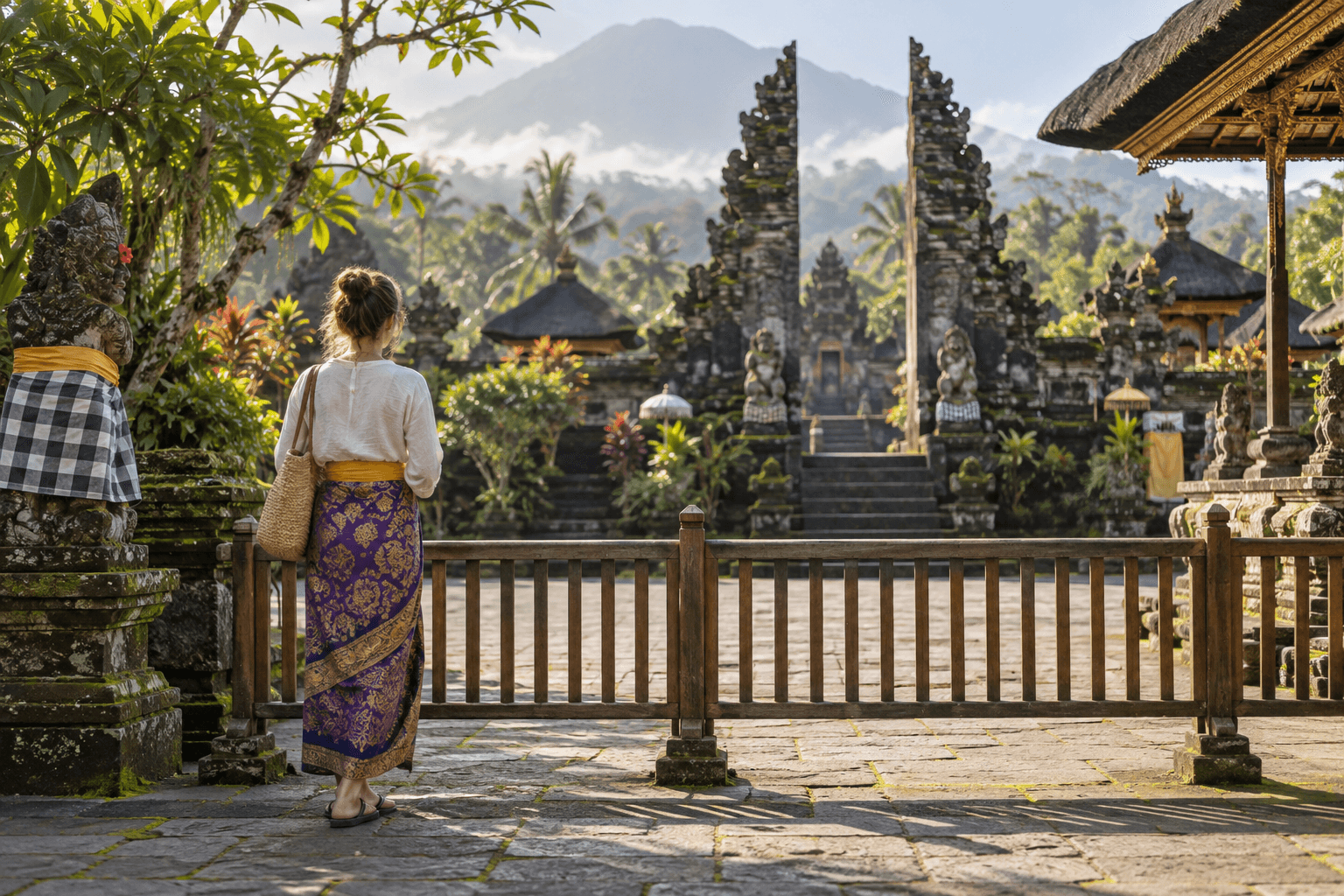
Borobudur Temple Compounds is a UNESCO World Heritage property in Central Java, near Magelang and within reach of Yogyakarta. Built in the eighth and ninth centuries, its terraces, relief panels, and stupas make it one of Indonesia's most significant cultural sites.
Allow at least half a day for the temple area, or stay nearby if you want a quieter start. Access to the monument structure can use separate, timed tickets and visitor limits, while rules may change for conservation. Buy through the official operator, arrive for your assigned time, dress respectfully, and consider a licensed guide who can explain the reliefs rather than treating the site as a quick photo stop.
2. Labuan Bajo and Komodo National Park: wildlife and island views
Labuan Bajo, on western Flores, is the main gateway for boat journeys into Komodo National Park. The UNESCO-listed park protects important Komodo dragon habitat as well as marine ecosystems. Popular itineraries may include a ranger-led wildlife visit, Padar Island viewpoints, snorkelling, and beaches, but routes depend on permits, sea conditions, and park rules.
A two- or three-day boat trip gives more breathing room than a rushed day trip, although it is not essential for every traveller. Compare operators carefully: ask about licensed guides, passenger limits, safety equipment, insurance, sleeping arrangements, waste handling, and exactly which fees are included. Never approach or feed wildlife, and follow ranger instructions inside the park.
3. Raja Ampat, Southwest Papua: a remote marine journey
Raja Ampat is known for limestone islands, coral reefs, and exceptional marine biodiversity. The journey commonly begins with a flight to Sorong, followed by a ferry or arranged transfer to Waisai and onward transport to an island stay. Connections can take much of a day, so this destination rewards travellers who can stay longer.
Budget for local visitor requirements, boat transfers, guides, and activities as well as accommodation. Piaynemo, village visits, snorkelling, and diving all require different logistics. Divers should choose a reputable operator suited to their certification and experience; everyone should avoid touching coral, use moorings where available, and keep single-use waste to a minimum. Sea and ferry schedules can change, so leave a buffer before an onward flight.
4. Mount Bromo, East Java: a dramatic volcanic landscape
Mount Bromo sits within Bromo Tengger Semeru National Park, where viewpoints overlook the Tengger caldera and its volcanic peaks. Sunrise tours are popular, but cloud, rain, smoke, and crowds can change the experience. The landscape remains striking later in the morning, so sunrise should be an option rather than a guarantee.
Common bases include Cemoro Lawang, Malang, and Probolinggo, each with different transfer times. Bring warm layers, sturdy shoes, sun protection, and a mask or scarf for dust. Use authorised entrances and transport, stay behind barriers, and check the park's current status because volcanic activity, fire risk, ceremonies, or conservation measures can close areas without much notice. Mount Semeru has separate access rules and should not be assumed to be open as part of a Bromo visit.
5. Lake Toba and Samosir: scenery and Batak Toba culture
Lake Toba is a vast volcanic lake in North Sumatra, with Samosir Island at its centre. It works best as a slower journey: lake views are only part of the appeal, alongside Batak Toba architecture, music, food, craft traditions, and communities in places such as Tomok and Simanindo.
Road journeys from Medan can take several hours, while air and road combinations may shorten some routes. Ferries connect lakeside points with Samosir, but timetables and weather can affect departures. Spend at least two or three nights, check where your accommodation is located before choosing a ferry, and approach cultural sites with respect. A local guide can add valuable context and direct more tourism income into the community.
Match the destination to your trip
For a first visit with straightforward connections, pair Borobudur with Yogyakarta or add Bromo to a wider Java route. Labuan Bajo suits travellers who want a compact mix of wildlife, hiking, and time on the water. Lake Toba offers a gentler pace, while Raja Ampat needs the most time, advance coordination, and usually the largest budget of these five.
Book the hardest connection first, then accommodation, and only then add activities that fit the time left. Keep refundable or flexible terms where possible. For parks and remote islands, compare a commercial listing with the official destination or park information before committing.
- 5–7 days: focus on one area.
- 10–14 days: combine two well-connected regions.
- Add at least one buffer night before an international flight after a boat or remote-island journey.
A responsible booking checklist
A lower price can hide park fees, unsafe transfers, overcrowded boats, or unrealistic timings. Ask for an itemised itinerary, cancellation conditions, operator contact details, and proof of the safety arrangements relevant to the activity. Travel insurance should match planned diving, hiking, boating, or other adventure activities.
At natural and cultural sites, follow local guidance, carry reusable essentials, avoid wildlife interactions designed for photographs, and ask before photographing people. These small choices protect the places that made the trip worth taking.
Frequently asked questions
Which destination is best for a first trip to Indonesia?
Borobudur with Yogyakarta is a practical cultural introduction with useful transport links. Labuan Bajo is a strong choice for travellers prioritising wildlife and island scenery. The right choice depends on interests, budget, mobility, and available days.
Can I visit all five places in one two-week trip?
It is technically possible to pass through several, but it would involve many flights and transfers. Two well-connected regions usually make a more enjoyable two-week itinerary, with buffer time for weather or schedule changes.
How many days should I allow for each place?
Allow about two days around Borobudur and Yogyakarta, three or more for Labuan Bajo, five or more for Raja Ampat after reaching Sorong, two for Bromo within a Java route, and at least two or three nights around Lake Toba.
When is the best time to visit these destinations?
There is no single best month for every region. Indonesia's rainfall and sea conditions vary by island. Check BMKG forecasts, park notices, and local operator advice for the exact destination and activity close to travel.
Do Komodo and Raja Ampat need advance booking?
Advance planning is sensible, especially in busy periods. Confirm permits, fees, transfers, safety arrangements, and cancellation terms directly with accommodation or reputable operators because availability and local rules can change.
Sources and further reading
We used the following primary consumer resources to review time-sensitive claims in this guide.
Compare options for your trip.
Continue to Traveloka to check current schedules, availability, and final prices for your travel dates.
Affiliate disclosure. This page contains Traveloka affiliate links. We may earn a commission when you book through them, at no additional cost to you. Commercial relationships do not determine our editorial recommendations.