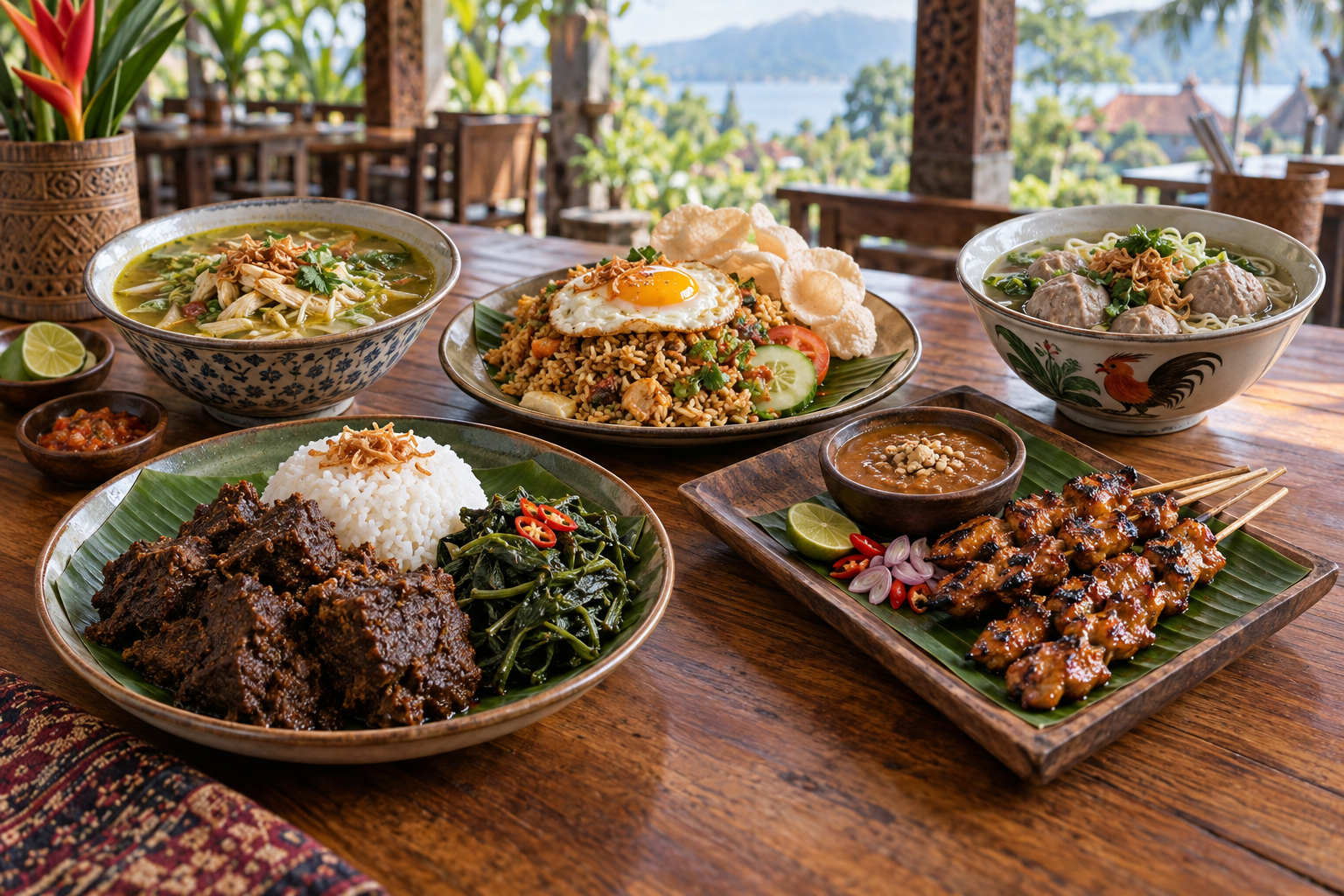
- Five essential dishes
- Regional variations
- Dietary and allergy notes
- Useful ordering phrases
A short introduction to Indonesian food
Indonesian cuisine is better understood as many regional cuisines rather than one fixed national menu. Coconut milk, chilli, shallot, garlic, turmeric, galangal, lemongrass, candlenut, shrimp paste, and sweet soy sauce appear often, but ingredients and cooking styles change between islands, communities, and individual cooks.
This guide starts with five dishes that are widely available and easy for a first-time visitor to recognise. Each has many valid versions. Use the list as a route into local food culture, then ask what the restaurant or warung specialises in instead of expecting every version to taste the same.
- Warung usually means a small local eatery or shop.
- Sambal may be served separately and can be very hot.
- Prices, portions, and accompaniments vary by region.
1. Rendang: slow-cooked Minangkabau depth
Rendang comes from Minangkabau culinary tradition in West Sumatra. Meat is cooked slowly with coconut milk and an aromatic spice mixture until the liquid reduces and the seasoning clings to the meat. Beef is common in restaurants, but rendang is also a cooking process and can use other ingredients.
At a Padang restaurant, rendang may arrive with rice, cassava leaves, sambal lado mudo, and curry gravy. Dishes are sometimes placed on the table for you to choose from; ask how billing works and pay only for what you consume. For deeper context, try it in Padang or Bukittinggi, although good Minangkabau restaurants operate throughout Indonesia.
2. Nasi goreng: one name, countless versions
Nasi goreng is rice stir-fried with seasonings and additions that vary by cook. Kecap manis gives many versions a dark colour and caramel-like sweetness, but it is not used in every regional style. Garlic, shallot, chilli, egg, chicken, seafood, vegetables, and shrimp paste are common possibilities rather than a universal recipe.
Look for nasi goreng kampung, goat nasi goreng, seafood versions, and red fried rice found in parts of East Java and Sulawesi. It often comes with cucumber, crackers, pickles, or a fried egg. Ask about the protein and seasoning when you have dietary restrictions: apparently plain rice may still contain shrimp paste, fish sauce, meat stock, or egg.
3. Sate or satay: far more than peanut sauce
Sate generally consists of seasoned ingredients grilled on skewers, but the meat, spice blend, sauce, and serving style are regional. Sate Madura commonly pairs chicken or goat with peanut sauce or sweet soy sauce. Sate Padang is served with a thick, spiced sauce, while Balinese sate lilit wraps seasoned minced fish, chicken, or other meat around a skewer before grilling.
Peanut sauce is common but not automatic, and sate is not automatically halal: pork versions are part of several regional cuisines. Ask which meat is used and whether the sauce contains peanuts if either point matters to you. Freshly grilled skewers should arrive thoroughly cooked and hot.
4. Soto: a family of regional soups
Soto is a broad family of soups, usually built around a seasoned broth with meat or poultry and accompaniments such as noodles, bean sprouts, cabbage, herbs, fried shallots, lime, or rice. There is no single definitive soto, which is precisely what makes it useful for exploring regional cooking.
Soto Lamongan is associated with East Java and may include koya, a savoury powder often made with crackers and dried shrimp. Soto Betawi from Jakarta commonly uses beef or offal in a rich broth that may contain coconut milk, dairy, or both. Soto Kudus is known for smaller bowls and chicken or buffalo versions, while coto Makassar has its own South Sulawesi identity and preparation. Ask about offal, dairy, coconut, and shrimp when needed.
5. Bakso: Indonesia's adaptable meatball soup
Bakso commonly refers to springy meatballs made with ground meat and starch, served in broth with noodles, tofu, greens, fried wonton, or other additions. Beef is widespread, but chicken, fish, seafood, and pork versions also exist. Texture and meat content vary considerably between vendors.
Season the broth gradually: sweet soy sauce, chilli sauce, vinegar, and sambal may be available at the table, but the original broth is worth tasting first. Bakso Malang often includes a mix of meatballs, tofu, dumplings, and fried elements, while other cities have their own shapes, fillings, and serving traditions.
Dietary needs: ask about ingredients, not appearances
A vegetable dish may be cooked with shrimp paste, fish sauce, meat stock, or fried shallots prepared in shared oil. Peanut, soy, wheat, egg, dairy, coconut, shellfish, and fish can appear in sauces or garnishes. With a serious allergy, use a professionally translated allergy card and confirm both ingredients and cross-contact; a casual phrase cannot guarantee safety.
Halal food is widely available, but Indonesia's regions and restaurants are diverse, so do not infer certification from the dish name or the country alone. Look for recognised certification or clearly identified halal dining, and ask when unsure. Bali, North Sulawesi, East Nusa Tenggara, and some other areas also have well-established pork dishes.
- Tidak pedas means not spicy, although the kitchen's interpretation can vary.
- Tanpa kacang means without peanuts.
- Saya alergi… means I am allergic to…
- Saya tidak makan… means I do not eat…
How to choose a safer place to eat
Busy stalls can be a useful sign of turnover, but popularity alone does not guarantee food safety. Choose food cooked thoroughly and served hot, look for clean utensils and preparation surfaces, wash or sanitise your hands, and be cautious with food that has sat at room temperature. Use safe drinking water and seek medical advice when symptoms are severe or persistent.
A small local business can be an excellent place to eat when its preparation looks careful. Ask hotel staff, residents, or a responsible guide for current recommendations, then observe the stall yourself. For travellers with health conditions, pregnancy, or reduced immunity, discuss destination-specific food and water precautions with a healthcare professional before travel.
Turn the list into a culinary itinerary
For a focused first food trip, combine Jakarta's broad regional selection with Yogyakarta or Surabaya, or travel to West Sumatra for Minangkabau cooking. Bali adds a distinct culinary tradition and many visitor-friendly cooking classes. The best route follows the regions you already want to visit rather than adding flights for a single dish.
Leave unscheduled meals for discoveries, order several dishes to share when appropriate, and ask the staff about their speciality. The five foods in this guide are an introduction; pempek, gudeg, rawon, gado-gado, nasi liwet, papeda, and hundreds of regional dishes can take the journey much further.
Frequently asked questions
What Indonesian food should a first-time visitor try?
Rendang, nasi goreng, sate, soto, and bakso are accessible starting points. They represent different cooking methods and have many regional versions, so try local specialities wherever you travel.
Is all Indonesian food spicy?
No. Many dishes are mild before sambal is added, while others contain chilli in the base seasoning. Ask for tidak pedas when you want less heat, but understand that spice levels remain subjective.
Is Indonesian food always halal?
No. Halal food is widely available, but ingredients and certification vary by restaurant and region. Look for recognised halal information and ask about meat, cooking alcohol, stock, and shared preparation when relevant.
Is Indonesian food suitable for vegetarians?
Many vegetable, tofu, and tempeh dishes can be suitable, but shrimp paste, fish sauce, meat stock, egg, and shared cooking oil are common. Explain what you do not eat and confirm the sauce and garnish.
What food allergens are common in Indonesian cooking?
Peanuts, soy, wheat, egg, coconut, fish, shellfish, and dairy can occur in sauces, soups, marinades, crackers, and garnishes. Travellers with serious allergies should carry a professionally translated allergy card and discuss cross-contact.
Sources and further reading
We used the following primary consumer resources to review time-sensitive claims in this guide.
- Indonesia Travel — Traditional Indonesian foods and their origins
- Indonesia Travel — Rendang and Minangkabau tradition
- Indonesia Travel — Sate lilit from Bali
- Indonesia Travel — Jakarta street food and regional soto
- Indonesia Travel — Halal, Safe, and Healthy Culinary Zones
- WHO Indonesia — Food safety in traditional markets
Compare options for your trip.
Continue to Traveloka to check current schedules, availability, and final prices for your travel dates.
Affiliate disclosure. This page contains Traveloka affiliate links. We may earn a commission when you book through them, at no additional cost to you. Commercial relationships do not determine our editorial recommendations.